Bowing Basement Wall Repair: Straps, Anchors and Braces
A bowing basement wall is a wall pushed inward by the soil outside it. The tell-tale signs are a horizontal crack about halfway up a poured wall, stair-step cracks in block, or a wall that visibly curves. Repair means holding the wall where it is, pulling it back or, in serious cases, rebuilding the section.
Describe the job and add your city. Free to request, no obligation.
The usual causes are wet clay that swells and presses on the wall, frost that heaves the soil in winter, poor drainage and roof water dumped by the foundation. Repairing the wall without dealing with that pressure invites the same movement again, so drainage and grading are part of the plan.
The right method depends on how far the wall has moved. Carbon fibre straps suit walls with limited inward bow. Wall anchors and steel braces resist more pressure and some can be tightened over time. A wall that has moved a lot may have to be excavated, straightened or rebuilt. An engineer's measurement is the first step.
What the work includes
- Measuring the bow with a level or plumb line and recording it
- Checking cracks, mortar joints and the floor-wall connection
- An engineer's review where the movement is large or local rules require it
- Installing carbon fibre straps bonded to the wall with epoxy
- Fitting steel beam or wall plate braces tied to the floor and joists
- Excavating for earth or wall anchors with plates set in the soil
- Addressing drainage, grading and downspouts that load the wall
- Re-measuring after the work to confirm the wall has stopped moving
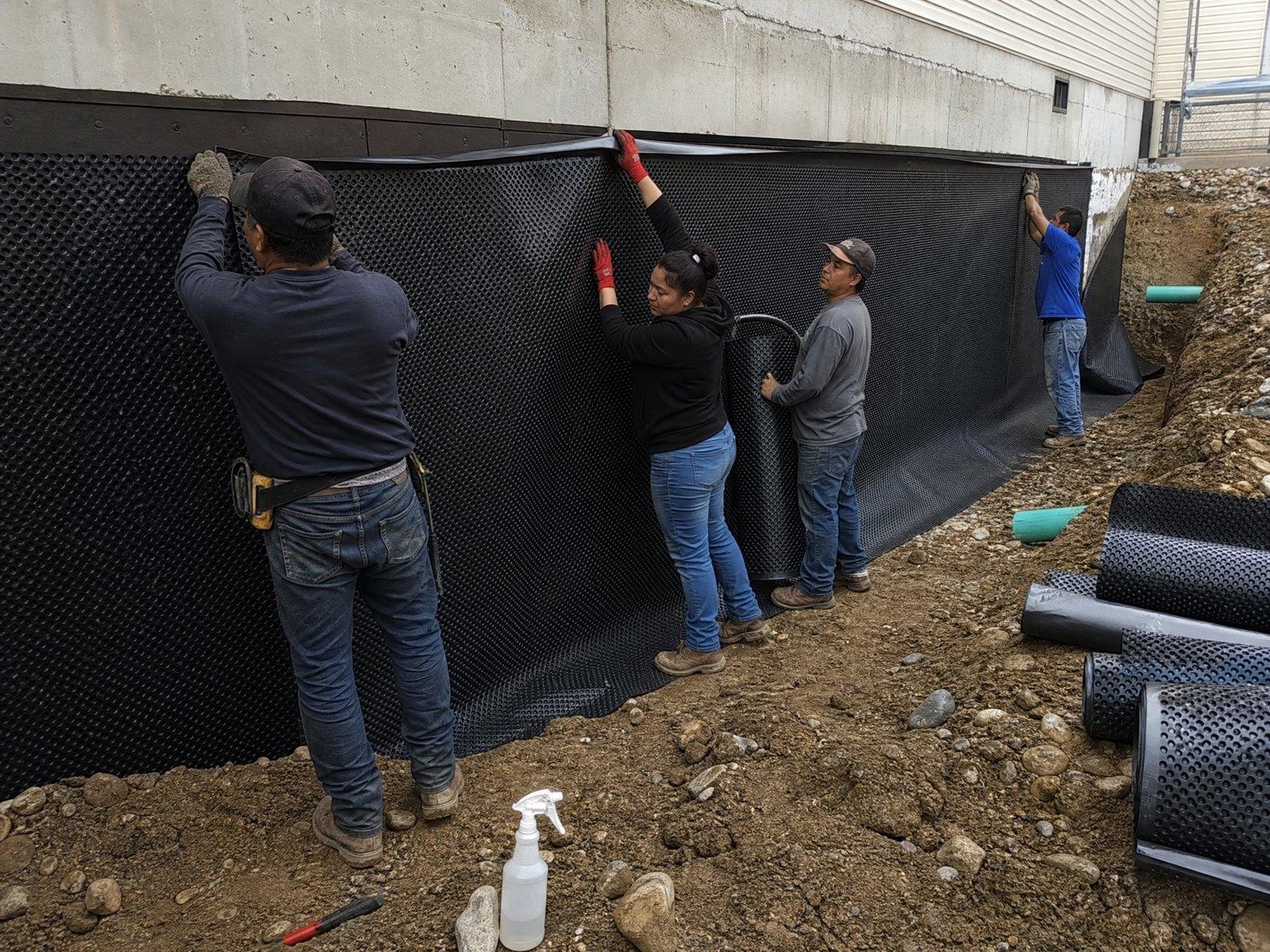
Signs a wall is bowing
A horizontal crack runs across the wall, often near the middle
A stair-step crack follows the mortar joints in block
The wall leans inward at the top or bulges at the middle
The wall meets the floor with a gap or a sheared joint
Door frames or windows near the wall are out of square
Water enters along the crack in wet weather
How the work goes, step by step
Describe the wall
Say where it bows, how long you have seen the crack and whether it is getting worse.
Measure the movement
A local specialist measures the bow and checks drainage, grading and downspouts outside.
Choose the method
Straps, braces, anchors or rebuilding is chosen based on how far the wall has moved.
Written quote
You receive the method, quantities, drainage work, permit needs and warranty terms.
Install and monitor
Reinforcement is installed, the wall is re-measured and monitoring advice is given.
What changes the price
- Degree of movement
- A slight bow may need straps, and a large one needs anchors, braces or rebuilding.
- Wall length and height
- More length means more straps, anchors or braces.
- Method
- Carbon fibre, steel braces and exterior anchors are priced very differently.
- Access
- Finished walls, tight yards and decks in the way raise labour.
- Engineering
- An engineer's report or drawings are often a separate item.
- Drainage fixes
- Fixing the water that loads the wall may be an added scope.
What a good quote spells out
- The measured bow in inches, and the method matched to that amount
- Whether the repair stops further movement or also pulls the wall back, and what is realistic
- How drainage and grading around the wall are dealt with
- Whether an engineer is involved, and who arranges permits
- Warranty terms, in writing
Bowing & Leaning Wall Repair: questions people ask
Can a bowing wall be straightened?
Anchors and braces can sometimes pull the wall back gradually. Straps usually only stop further movement. A wall that has moved too far may have to be rebuilt.
Is a bowing basement wall an emergency?
It deserves attention soon. Walls that continue to move can crack or fail, and early repair is more limited and less costly.
Which is better, carbon fibre straps or wall anchors?
Straps are less invasive and suit walls with slight bowing. Anchors hold more pressure and suit larger movement, though they need digging outside.
What causes basement walls to bow?
Pressure from wet or frozen soil, poor drainage, roof water at the foundation and in some cases heavy surface loads close to the wall.
Will fixing drainage alone solve it?
It reduces the cause, but a wall that has already bowed will not return to straight without reinforcement. Both are usually needed.
Other Tidivex services
Cracks, Water or Movement? Get It Looked At.
Fill out the quote form with your city and what you are seeing. A local specialist follows up to book an assessment and give you a written quote. Free to request, no obligation.
Request a free quote →