Exterior Foundation Waterproofing: Stop Water at the Wall
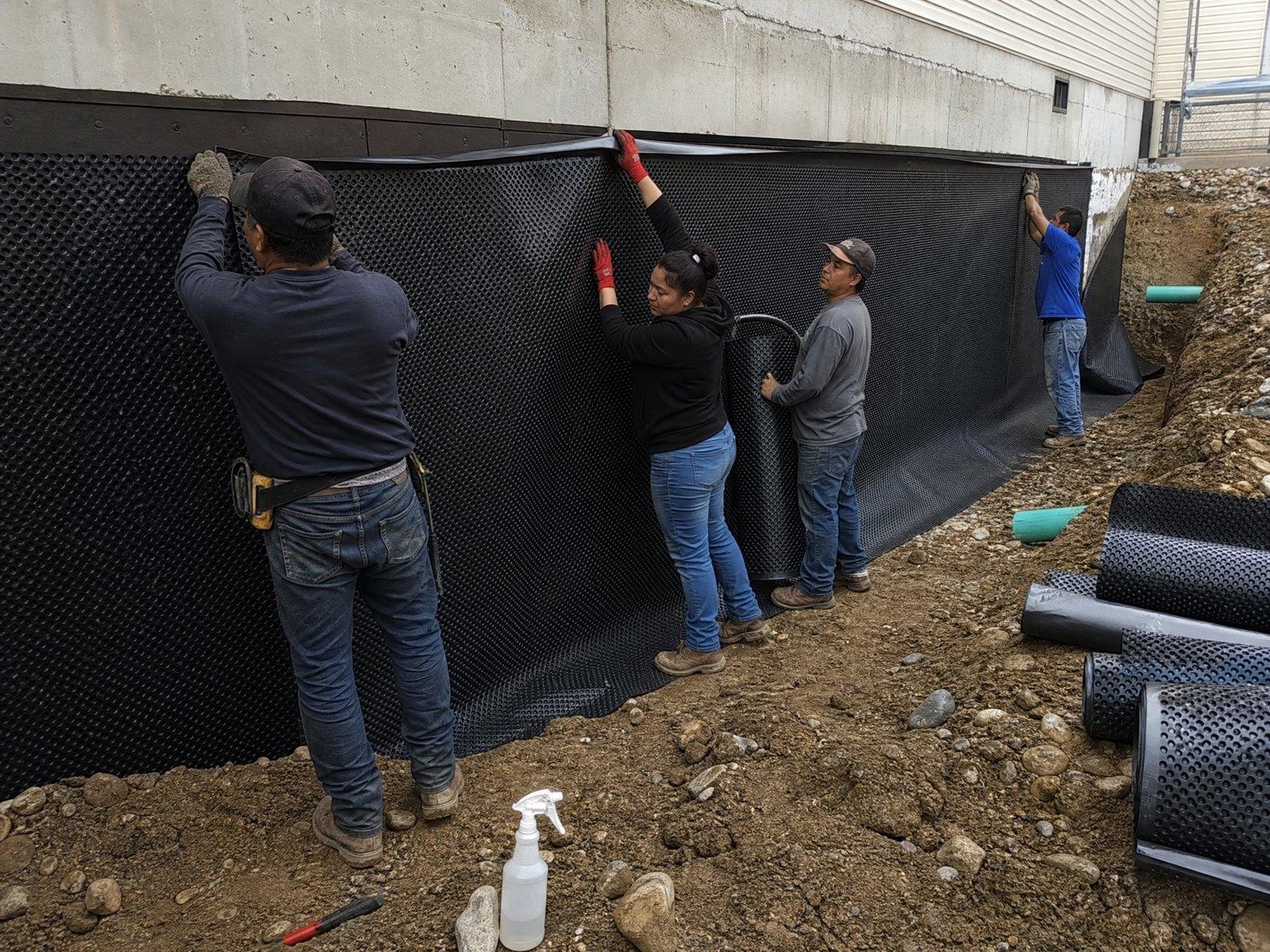
Exterior foundation waterproofing is done from the outside. The soil is dug down to the footing, the wall is cleaned and repaired, then a waterproof membrane and drainage board go on, with new weeping tile at the bottom, and the trench is backfilled with clean stone and soil. Water is stopped at the surface instead of being managed after it gets through.
Describe the job and add your city. Free to request, no obligation.
It is the most thorough fix and the one new houses get during construction. It is also the most disruptive and often the most expensive: excavation reaches around the house, and decks, steps, patios, shrubs and walkways in the way have to be moved or rebuilt. Access on tight lots can make it difficult or impossible.
It makes the most sense when the wall itself is failing, the drainage tile has collapsed, or the basement is to be finished and has to be dry for good. If the main problem is a single leaking crack or a rising water table, a cheaper method may be enough.
What the work includes
- Locating utilities and protecting gas, water, power and sewer lines
- Excavating around the foundation down to the footing
- Cleaning the wall and patching cracks, holes and tie rod openings
- Applying a waterproof membrane or coating to the wall
- Fitting a dimpled drainage board to protect the membrane and carry water down
- Laying new weeping tile at the footing in clean stone with filter fabric
- Backfilling in layers with free-draining material and grading away from the house
- Restoring lawns, paths and steps as agreed
Signs exterior waterproofing may be the right fix
Water enters at several points along more than one wall
The foundation wall is crumbling, spalling or showing damp patches
Existing weeping tile is crushed, silted or was never installed
The house is older and the original tar coating has worn away
A basement is going to be finished and must stay dry
Interior fixes have been tried and water still returns
How the work goes, step by step
Describe what is wrong
Mention where water enters, the age of the house and any past repairs.
Inspect and plan
A local specialist looks at the walls, the lot, utilities and drainage and sets out how far the excavation goes.
Compare options
Exterior and interior routes are weighed, with the access issues and costs of each.
Written quote
The quote lists the excavation, wall repair, membrane, drain, backfill, restoration and permits.
Dig, seal and restore
The work is done in sections, inspected before backfilling where required, and the site is returned to the agreed state.
What changes the price
- Wall length and depth
- More perimeter and deeper excavation increase labour and material.
- Soil and groundwater
- Heavy clay, rock and water in the trench slow the work and add pumping.
- Obstructions
- Decks, patios, trees, steps and utilities need moving or protecting.
- Membrane system
- Sprayed coatings, sheet membranes and drainage boards are priced differently.
- Weeping tile
- New tile and connection to a sump or approved outlet add to the scope.
- Restoration
- Rebuilding landscaping, hard surfaces and fences is often a separate line.
What a good quote spells out
- How deep the excavation goes and how much of the perimeter it covers
- The membrane and drainage board named, with their thickness and how they are protected
- Whether new weeping tile is included and where it drains
- What is moved, rebuilt or replanted afterward
- Warranty terms, in writing
Exterior Waterproofing & Membranes: questions people ask
How long does exterior waterproofing take?
A typical house takes several days to a couple of weeks, depending on perimeter, soil, weather and restoration. Large or deep jobs take longer.
Will exterior waterproofing wreck the yard?
It disturbs the strip around the house. Good planning limits the damage, and the quote should say what is restored and who does it.
Is exterior waterproofing better than interior?
It stops water earlier and protects the wall, so it is the most complete option. It also costs more and is not possible on every lot.
Can it be done on one wall only?
Yes, when the problem is limited to one side. The quote should explain whether water on the other sides is likely to follow.
Does waterproofing need a permit?
Often, since digging next to the foundation and connecting drainage may be regulated. The quote should say who arranges it.
Other Tidivex services
Cracks, Water or Movement? Get It Looked At.
Fill out the quote form with your city and what you are seeing. A local specialist follows up to book an assessment and give you a written quote. Free to request, no obligation.
Request a free quote →