Interior Basement Waterproofing: Drain, Sump and Pump
Interior basement waterproofing manages water after it reaches the foundation. A channel along the base of the wall catches seepage at the floor-wall joint and carries it to a sump pit, where a pump sends it out and away from the house. A membrane on the wall guides moisture down into the channel instead of into the room.
Describe the job and add your city. Free to request, no obligation.
It is the common choice when digging outside is impractical or too costly. The work is done from inside, so there is no excavation around driveways, decks, gardens or neighbouring lots. The cost is that the basement floor is opened along the walls, and the system relies on a pump that must keep working.
Interior systems manage water rather than stopping it at the wall, so it matters that the cause is understood. Gutters and downspouts discharging by the wall, bad grading or a failed outside drain can all make the problem worse, and cheap improvements there reduce what the pump has to handle.
What the work includes
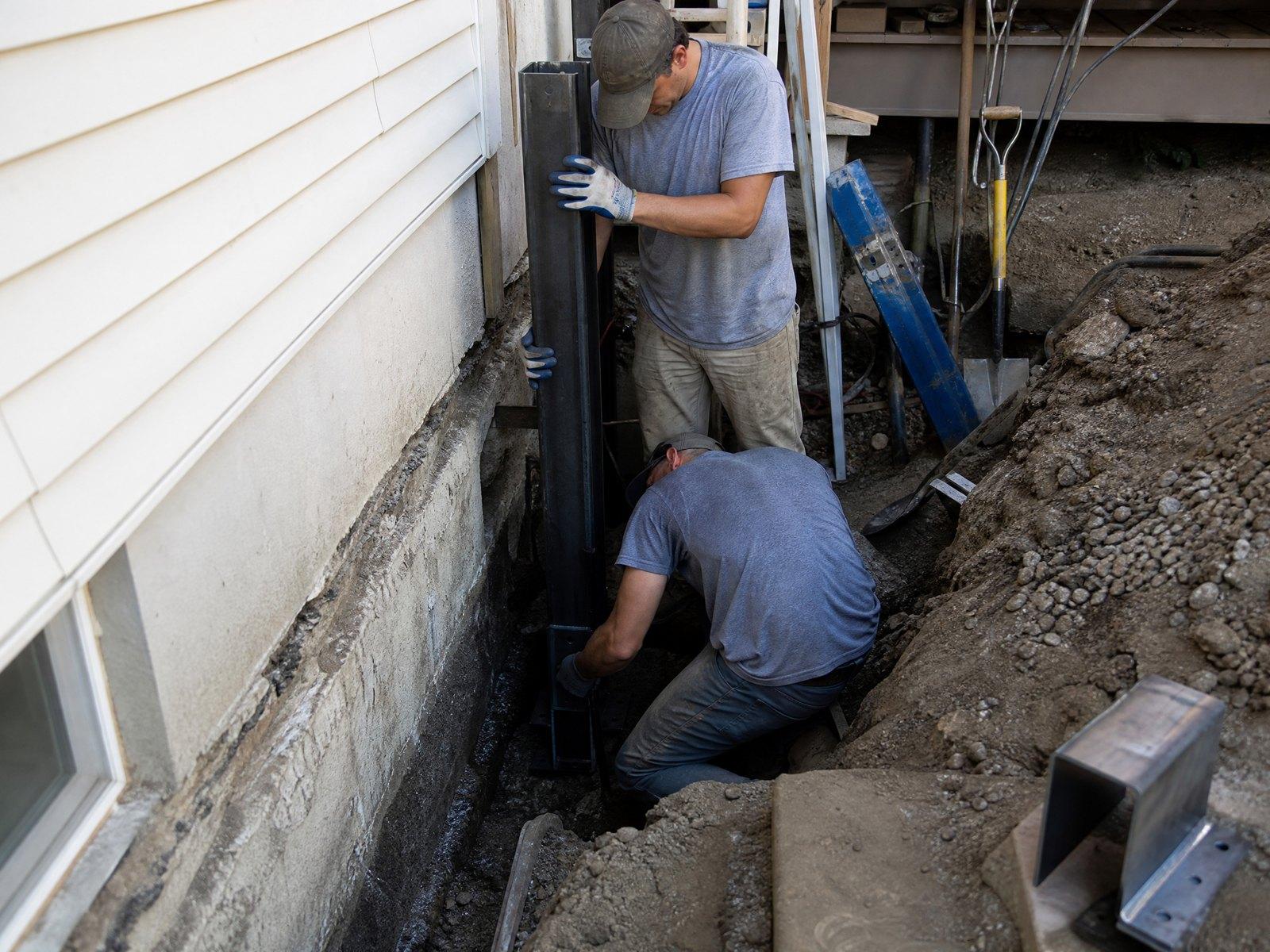
- Breaking out a strip of concrete floor along the walls to be drained
- Laying perforated drain pipe in a bed of clean stone beside the footing
- Installing a wall membrane or drainage board to guide water into the channel
- Setting a sump pit with a lid, a pump and a discharge line to an approved outlet
- Adding a check valve, an alarm and a battery backup pump if chosen
- Pouring concrete back over the trench and finishing the floor edge
- Sealing wall cracks and floor joints that the system does not carry
- Testing the pump and checking the flow before leaving
Signs a basement needs a drain and sump system
Water appears along the wall-floor joint after rain or snowmelt
White powdery deposits on walls show moisture coming through the masonry
The floor is damp or puddled in one corner or along a wall
A musty smell hangs in the basement, especially after wet weather
Stored items and cardboard boxes go soft or mouldy
An existing sump pit fills quickly or the pump runs nonstop
How the work goes, step by step
Describe the water
Say where it enters, when it happens and whether the basement is finished.
Inspect inside and out
A local specialist checks the walls, floor joint, grading and downspouts, and where the pump could discharge.
Choose the system
The drain route, pit location, pump and backup are laid out, with exterior fixes noted.
Written quote
The quote lists the footage of drain, the pump, discharge, restoration and any permits.
Install and test
The floor is opened, drain and pit are placed, concrete is repoured and the pump is tested.
What changes the price
- Length of wall drained
- The linear footage of perimeter drain is the main driver.
- Number of sumps and pump quality
- More pits, stronger pumps and battery backups cost more.
- Finished or unfinished basement
- Finished walls and floors need demolition, protection and rebuilding.
- Floor thickness
- Breaking out and re-pouring thick concrete takes more time.
- Discharge route
- A long or buried discharge line to a distant outlet adds pipe and trenching.
- Wall condition
- Cracks, efflorescence and failing masonry may need separate repair.
What a good quote spells out
- How much of the wall perimeter the drain covers and why
- The pump type, the backup arrangement and the discharge route
- What happens to the wall surface: membrane, wall panels or bare masonry
- What is restored in a finished basement and what is left for you
- Warranty terms and maintenance advice for the pump, in writing
Interior Basement Waterproofing: questions people ask
Is interior waterproofing as good as exterior?
They solve different parts of the problem. Interior systems manage water that reaches the wall. Exterior systems stop it at the surface. Interior work is less disruptive and often costs less.
Is a battery backup needed for the sump pump?
In areas with frequent storms and power cuts, it is a sensible addition, since the pump is useless when the power is off during heavy rain.
How long does interior waterproofing take?
Many basements are done in a few days. Larger homes, finished spaces and long drains take longer.
Will a sump pump make noise?
A pump makes some noise when it runs, and a lidded pit keeps it down. Frequent running is a sign that something outside needs attention.
Can interior waterproofing work with a finished basement?
Yes, though walls and floors along the perimeter have to be opened, then restored. The quote should say who repairs finishes.
Other Tidivex services
Cracks, Water or Movement? Get It Looked At.
Fill out the quote form with your city and what you are seeing. A local specialist follows up to book an assessment and give you a written quote. Free to request, no obligation.
Request a free quote →